Labor management is one of the biggest challenges for Indian contractors. With a mix of skilled and unskilled workers, varying wage structures, and high turnover, effective labor management is crucial for success. Using a labour app or labour attendance app can significantly simplify this process.
For compliance and proper documentation, contractors must maintain muster roll records as per BOCW Act requirements. Muster roll helps track attendance, wages, and ensures legal compliance.
Understanding Your Workforce
Indian construction sites typically have:
Skilled Workers
- Masons (rajmistry)
- Carpenters (badhai)
- Electricians
- Plumbers
- Welders
- Bar benders
Characteristics: Higher wages, more reliable, often have regular employer relationships, expect respect for their skills
Semi-skilled Workers
- Mason helpers
- Painters
- Tile workers
- Plasterers
- Machine operators
Characteristics: Mid-range wages, learning advanced skills, potential to become skilled workers
Unskilled Workers
- General laborers (mazoor)
- Helpers
- Material carriers
- Cleaning crew
Characteristics: Daily wages, high turnover, do basic tasks, often migrant workers
Each group needs different management approaches.
Best Practices for Labor Management
1. Fair and Timely Payment
This cannot be emphasized enough. Pay workers on time, every time. Even a day's delay damages trust and morale.
Payment best practices:
Weekly payment cycles: Most daily wage workers expect weekly payment (Saturday evenings or Monday mornings)
Clear payment terms: Discuss rates upfront, get verbal or written agreement
Immediate settlement: For completed work or when workers leave
Transparent deductions: If deducting advances, show clear calculation
Payment records: Keep signed records of all payments
Bank transfers: Consider digital payments for transparency and records
Emergency advances: Have policy for advance payments (family emergencies)
2. Clear Communication
Many construction workers may not be highly educated. Use simple, clear language:
Communication best practices:
Show, don't just tell: Demonstrate what needs to be done
Use diagrams/sketches: Visual instructions for complex tasks
Repeat important points: Ensure understanding
Verify understanding: Ask them to explain back
Use local language: Hindi, or regional language (Tamil, Bengali, etc.)
Morning briefings: 10-minute meeting to clarify day's work
Check-ins: Visit workers during the day to answer questions
3. Skill Development
Invest in training your regular workers:
Training benefits:
Increased value: Skilled workers are more productive
Loyalty: Workers appreciate investment in their growth
Reduced dependency: Less reliance on external skilled labor
Better quality: Higher skill = better work quality
Higher retention: Trained workers are less likely to leave
Training methods:
- On-the-job mentoring (skilled worker teaching helper)
- Weekend skill workshops
- Safety training sessions
- Equipment operation training
- Quality standards demonstration
4. Proper Working Conditions
Provide basic amenities:
Essential facilities:
Shade and seating: Rest areas for breaks
Clean drinking water: Regular supply, especially in summer
Toilet facilities: As per law (1 toilet per 25 workers)
First aid: Basic medical supplies
Meal arrangements: Space to eat lunch
Protective equipment: PPE at no cost to workers
Shelter: Protection from rain during monsoon
Better conditions lead to better productivity and loyalty.
5. Systematic Attendance
Use digital attendance tracking with a contractor app designed for Indian construction sites:
Benefits of digital attendance:
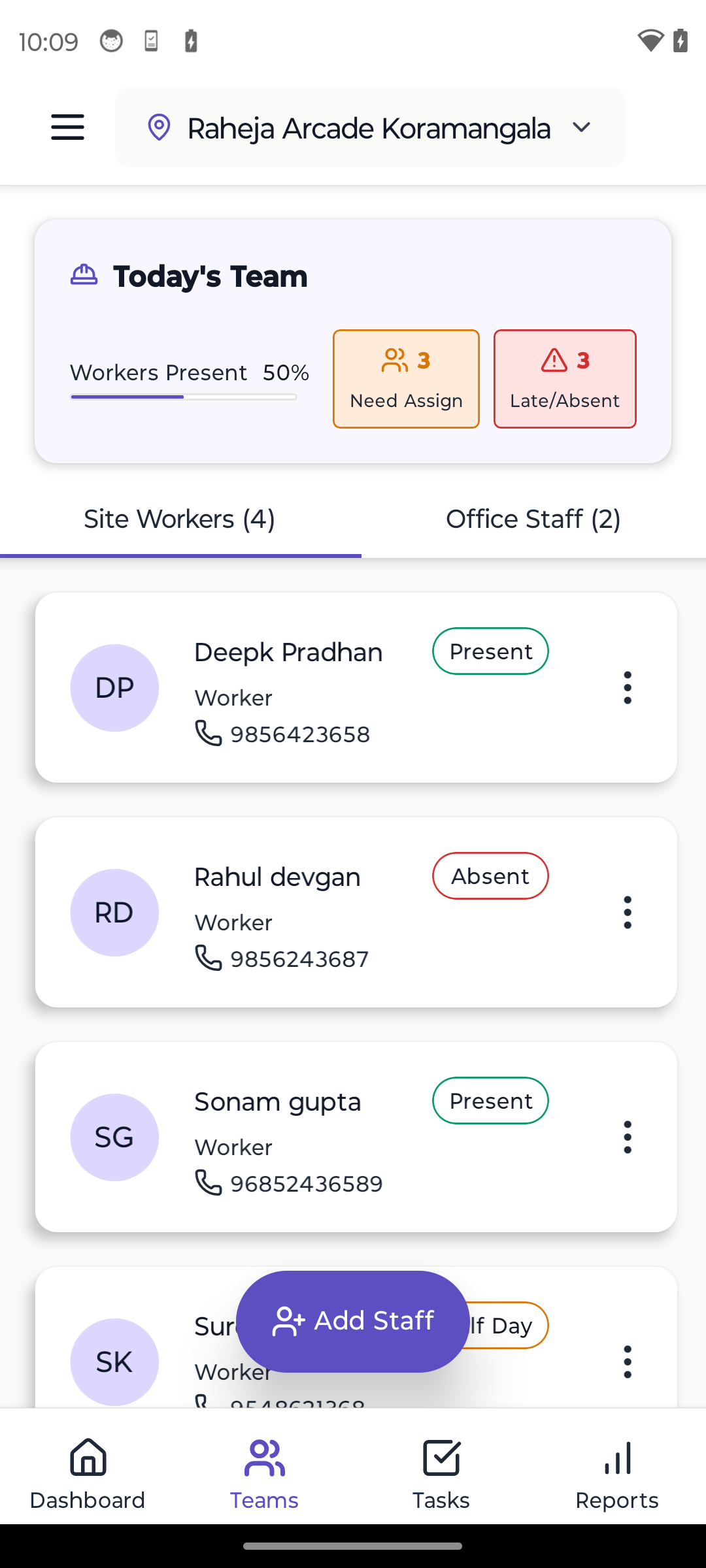
Quick and accurate: Mark 50+ workers in under 2 minutes
Prevents proxy: Photo verification stops fake attendance
Automatic calculation: No manual errors in payment calculation
Performance data: Track attendance patterns and productivity
Dispute resolution: Clear records prevent payment disputes
Offline capable: Works without internet
Apps like Yojo labour attendance app make attendance tracking effortless, even at remote sites without internet connectivity. The offline contractor app works perfectly even when there's no network.
Dealing with Common Labor Issues
High Turnover
Daily wage workers often move between contractors.
Retention strategies:
- Build relationships with good workers
- Pay slightly above market rates for skilled workers (5-10% premium)
- Provide steady work (workers value consistency)
- Treat workers with respect (goes a long way)
- Quick payment (reliability matters)
- Safe working conditions
- Recognize good performance
- Provide advance opportunities
- Fair dispute resolution
Poor Productivity
Some days, workers just aren't productive.
Improving productivity:
Set clear daily targets: Everyone knows what's expected
Monitor progress regularly: Check work 2-3 times during day
Provide immediate feedback: Correct issues quickly
Recognize good performance: Praise or small bonuses
Ensure material availability: Don't let workers wait for materials
Proper tools: Good tools improve efficiency
Work organization: Plan work sequence to avoid idle time
Team composition: Right mix of skilled and unskilled workers
Absenteeism
Workers not showing up disrupts schedules.
Managing absenteeism:
Track patterns: Use data to identify chronic absentees
Address quickly: Talk to workers about attendance
Have backup contacts: Maintain list of backup workers
Build labor network: Multiple sources for workers
Fair sick leave: Allow genuine sick days
Advance notice: Encourage workers to inform if they can't come
Group responsibility: Teams self-regulate attendance
Quality Issues
Work not meeting standards.
Ensuring quality:
Clear standards: Show examples of acceptable work
Regular inspection: Check work frequently
Immediate correction: Fix mistakes before they compound
Skill assessment: Ensure workers are capable of assigned tasks
Supervision ratio: One supervisor per 10-15 workers
Rework consequences: Workers redo poor quality work
Quality training: Demonstrate proper techniques
Building a Reliable Labor Network
Your regular, reliable workers are your biggest asset:
Creating Your Network
Maintain a database: Track contact details, skills, reliability, pay rate
Keep updated: Workers change phones - update regularly
Give preference: Call good workers first for new projects
Ask for referrals: Good workers know other good workers
Build relationships: Remember names, ask about family
Fair treatment: Reputation spreads - treat everyone fairly
Emergency help: Help workers in genuine emergencies (builds loyalty)
Festival bonuses: Small bonus during Diwali/festivals
Worker Categories in Your Network
Category A - Core team:
- 5-10 highly skilled, ultra-reliable workers
- Use on every project
- Pay premium rates
- First to call
Category B - Regular team:
- 20-30 skilled and semi-skilled workers
- Use frequently
- Market rates
- Reliable but not always available
Category C - Pool workers:
- 50+ workers you've worked with
- Call when A and B teams are full
- Decent quality, acceptable reliability
Documentation and Compliance
Maintain proper records:
Essential Documentation
Attendance registers: Daily attendance with signatures
Payment records: Dates, amounts, signatures/thumbprints
Skill certifications: For electricians, welders, etc.
Identity documents: Copy of Aadhar, voter ID
Emergency contacts: Family contact numbers
Insurance: If providing worker insurance
EPF/ESI: If applicable (depends on establishment size)
Advance register: Track advances given
This protects both you and your workers. In case of disputes or accidents, proper records are your protection.
The Role of Technology
Digital tools significantly improve labor management. A comprehensive contractor management system helps contractors streamline operations:
What Technology Enables
Quick attendance marking: 2 minutes vs 30 minutes
Accurate payment calculation: No manual errors
Performance tracking: Data on attendance, productivity
Communication: WhatsApp groups for updates
Task assignment: Clear work allocation
Work documentation: Photo verification of completion
Analytics: Identify trends and optimize
Choosing Labor Management Tools
Look for:
- Offline capability (essential for sites)
- Simple interface (workers must be able to use)
- Photo verification (prevents fake attendance)
- Payment calculation (automatic wage calculation)
- Hindi support (language accessibility)
- Mobile-first (everyone has phones)
Creating a Positive Work Culture
Workers who feel valued work better:
Building Good Culture
Respect everyone: Skilled and unskilled alike
Listen to concerns: Workers often have valuable insights
Acknowledge good work: Recognition costs nothing
Provide growth opportunities: Promote from within
Be fair and consistent: Same rules for everyone
Solve problems quickly: Don't let issues fester
Celebrate milestones: Project completion celebrations
Support in difficulties: Help during genuine problems
The Impact of Culture
Good workplace culture leads to:
- Lower turnover
- Higher productivity
- Better quality work
- Easier recruitment
- Positive word-of-mouth
- Workers referring others
- Less supervision needed
- Fewer conflicts
Legal Compliance
Be aware of key requirements:
Basic Legal Requirements
Minimum wages: Pay at least state-mandated minimum wage
Working hours: 8 hours/day, 48 hours/week (construction)
Overtime: 1.5x-2x rate for overtime work
Provident Fund (EPF): If 20+ employees
ESI: If 10+ employees and earnings below threshold
Bonus: Annual bonus for employees working 30+ days
Weekly off: At least one day off per week
Registration: Register establishment with labor department
Registers: Maintain required registers as per Act
Welfare facilities: Toilets, drinking water, first aid
Real-World Success Stories
"We maintained a core team of 8 skilled workers across 3 sites. Same faces, same quality, complete trust. They became ambassadors for our work." - Rajesh Kumar, Delhi Contractor
"Switched to digital attendance. Fake attendance dropped to zero. Workers knew they couldn't manipulate. Saved ₹15,000/month." - Amit Verma, Mumbai
"Invested in skill training for helpers. Within 6 months, had 3 new semi-skilled workers. Reduced dependency on outside labor." - Suresh Patil, Pune
Conclusion
Good labor management isn't rocket science - it's about fairness, clear communication, and systematic processes. The contractors who master this have a huge competitive advantage.
Key takeaways:
- Pay fairly and on time - non-negotiable
- Communicate clearly and frequently
- Invest in your regular workers
- Use technology to reduce admin burden
- Build and maintain a worker network
- Create a culture of respect and fairness
- Maintain proper documentation
- Stay legally compliant
Remember: Your workers are not just labor - they're the people who bring your vision to reality. Treat them accordingly, and they'll help you build your business.
Next Steps
- Implement digital attendance tracking using a labour attendance app
- Create your worker database today with a contractor app
- Review your payment process for improvements
- Schedule monthly skill training sessions
- Read more about labour management
- Try Yojo contractor app free today
Ready to Transform Your Construction Business?
Start managing your sites efficiently with Yojo today.
Try Yojo FreeConstruction Management Expert
Senior Construction Consultant at Yojo
10+ years of experience
Reviewed on 20 December 2023
About Yojo Team
Construction management expert with 10+ years of experience helping Indian contractors build better businesses. Specialized in digital transformation for construction sites.
Related Pages
Labour App
India's best labour app — attendance, wages & payroll
Labour Attendance App
Mark attendance, half-days & overtime in one tap
Daily Wage App
Automatically calculate daily wages from attendance
Best Contractor Apps India
Compare the best contractor apps in India
Labour Wage Calculator Guide
Calculate daily, weekly, monthly wages for construction workers
Muster Roll Generator
Free BOCW muster roll PDF generator for construction sites
Mumbai Material Rates Today
Current market rates for construction materials in Mumbai, Maharashtra
Rates are indicative and may vary by supplier and location
View Mumbai page →