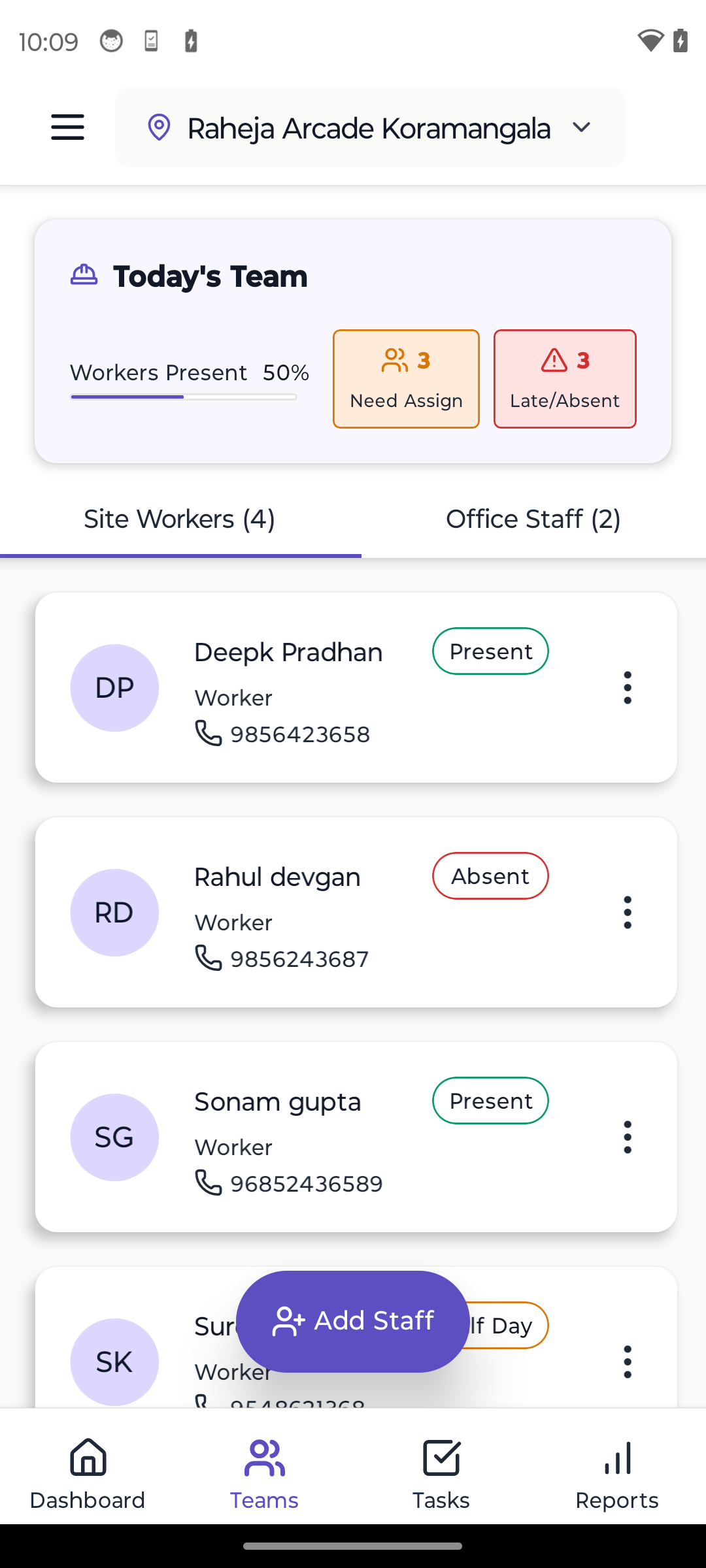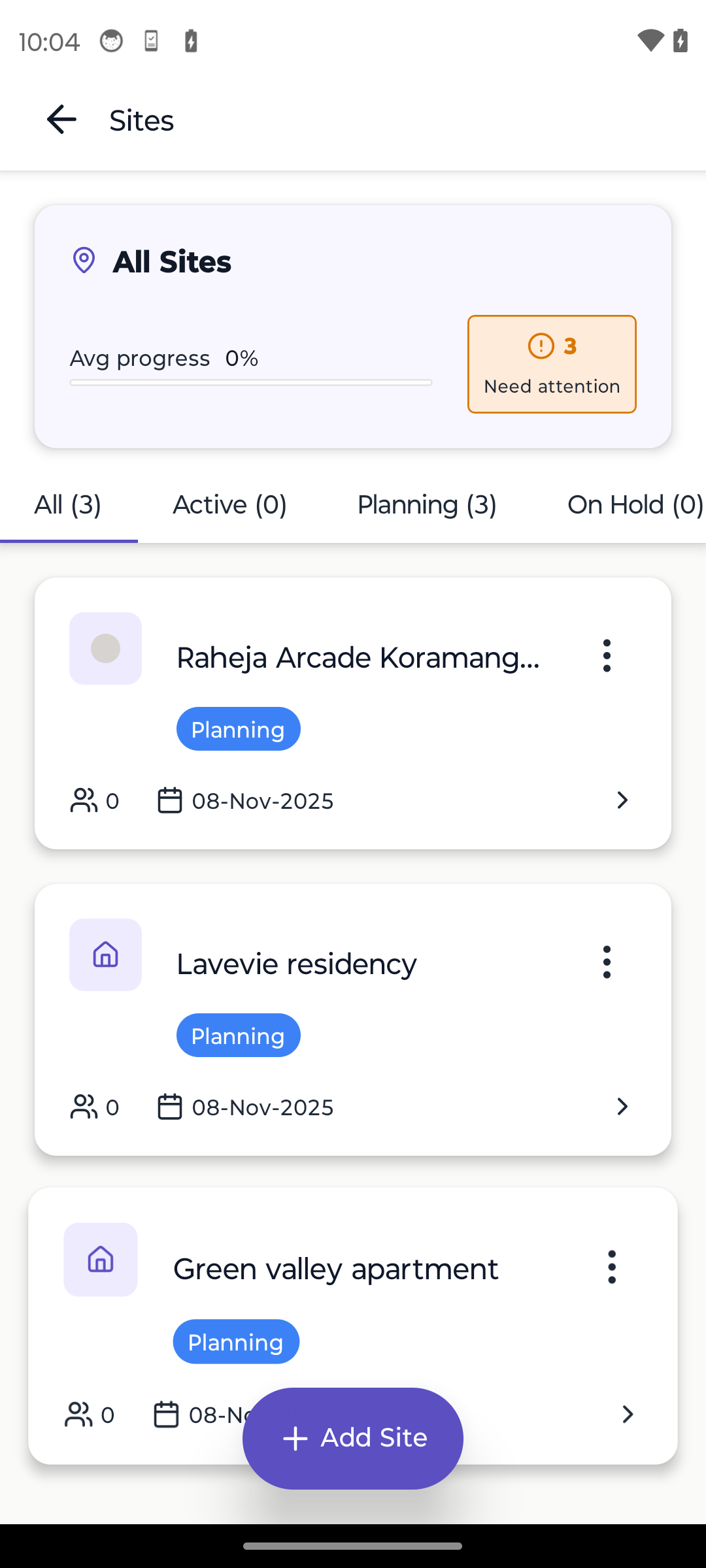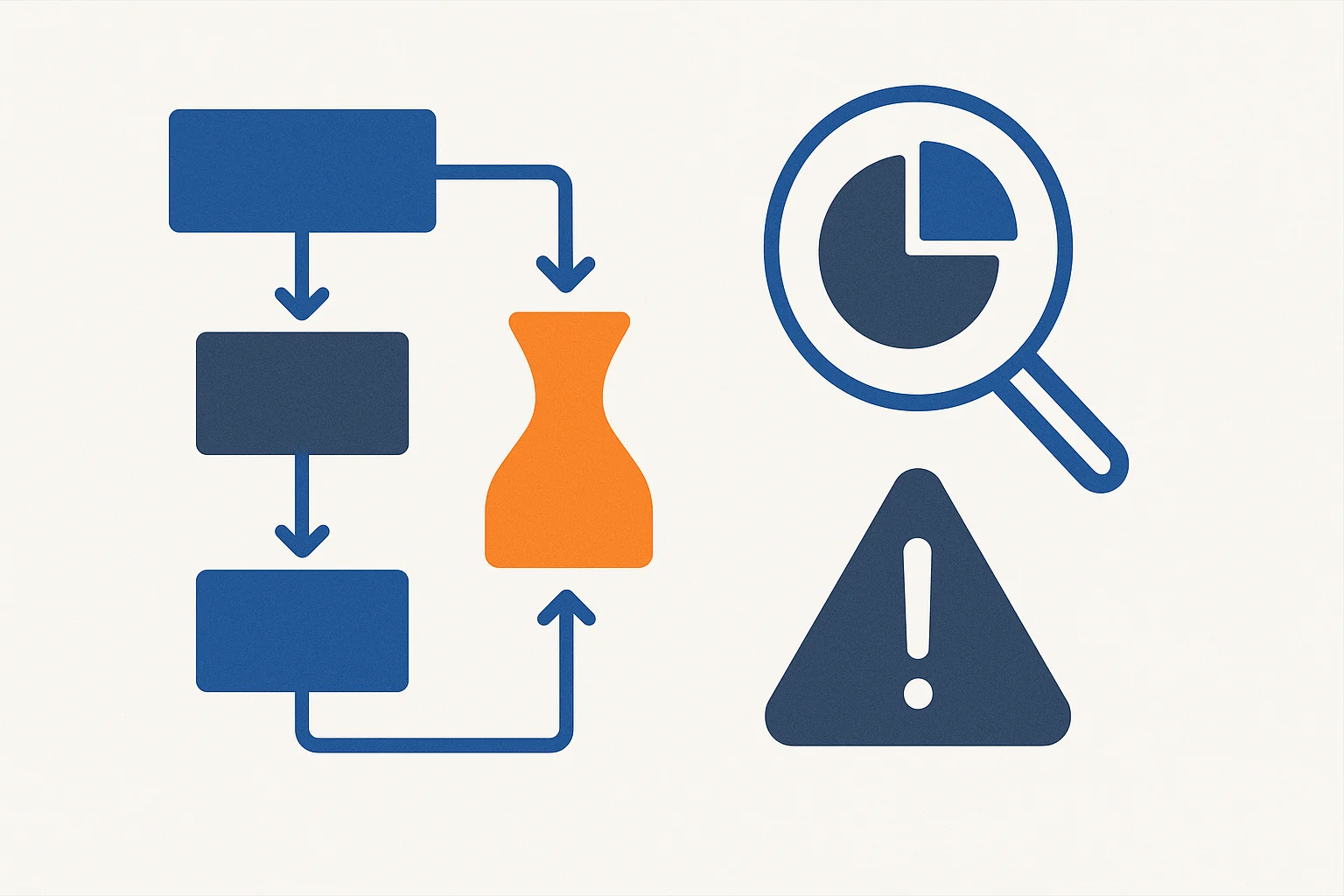
Your workers are present, but productivity is low. Materials are available, but work is slow. The problem? Hidden bottlenecks eating 15-20% of your productive time. A contractor app with progress tracking can help identify these bottlenecks. Here's how to find and fix them.
What Are Bottlenecks?
Definition: Any constraint that limits your site's productivity.
The effect: Like a bottle's narrow neck limiting water flow, bottlenecks limit work flow regardless of resources available.
Common signs:
- Workers standing idle
- "Waiting for..." excuses
- Uneven progress across tasks
- Resources unused
- Delays without clear cause
Types of Construction Bottlenecks
1. Resource Bottlenecks
Material shortages:
- Cement arrives late → masons idle
- Wrong tiles delivered → tile work stops
- Insufficient scaffolding → height work delayed
Equipment unavailable:
- Only one mixer → teams waiting turn
- Lift broken → material movement slows
- No scaffolding → can't access work areas
Labor shortages:
- Not enough skilled workers → work accumulates
- Key worker absent → specialized work stops
- Team size mismatch → inefficient deployment
2. Process Bottlenecks
Sequential dependencies:
- Can't plaster until masonry dries
- Can't paint until plaster cures
- Can't finish until structure complete
Approval delays:
- Waiting for client approval to proceed
- Inspection pending → next phase blocked
- Drawing clarifications needed
Information gaps:
- Unclear specifications → work can't start
- No drawing details → team waiting
- Changed requirements → rework needed
3. Coordination Bottlenecks
Communication failures:
- Supervisor doesn't inform about delays
- Teams not aware of dependencies
- Client expectations misaligned
Scheduling conflicts:
- Two teams need same space
- Materials arrive when no labor available
- Equipment scheduled elsewhere
How to Identify Bottlenecks
Method 1: Direct Observation
What to do: Spend 2-3 hours observing site.
What to look for:
- Workers standing around
- Equipment sitting unused
- Materials piled but not used
- Activity in some areas, none in others
- People waiting for others
When: Random times, not just morning. Bottlenecks often appear mid-day.
Record: Note time, location, people affected, apparent reason.
Method 2: Worker Conversations
Ask workers: "What stops you from working faster?"
Common answers reveal bottlenecks:
- "Waiting for materials" → Supply chain issue
- "Waiting for Mason Ji to finish" → Skill/resource shortage
- "Not sure what to do next" → Communication issue
- "No space to work" → Coordination issue
- "Equipment not available" → Resource constraint
Pro tip: Workers know the problems. Just ask.
Method 3: Task Completion Analysis
Track: How long each task actually takes vs should take.
Example:
- Brick work: Should take 3 days → Actually took 7 days
- Why? Workers idle day 2 (no cement), day 4-5 (waiting for electrician to finish conduit)
Pattern analysis:
- If EVERYTHING is slow → Systematic issue (team skill, management)
- If SPECIFIC tasks slow → Bottleneck in that process
Method 4: Idle Time Tracking
Simple method:
- Count workers present
- Count workers actively working
- Difference = idle workers
- Ask why they're idle
Example:
- 25 workers present
- 18 actively working
- 7 idle (4 waiting for material, 3 waiting for area to clear)
Target: Less than 10% idle time. Above 15% indicates bottlenecks.
Common Bottlenecks & Solutions
Bottleneck #1: Single Skilled Worker Dependency
Problem: One skilled mason, everyone waits for him.
Impact: 10 helpers idle when mason unavailable.
Solution:
- Train additional workers in that skill
- Hire second skilled worker
- Plan work to maximize skilled worker's time
- Don't waste skilled time on unskilled work
Bottleneck #2: Insufficient Equipment
Problem: One concrete mixer, 3 teams need concrete.
Impact: Teams take turns, 2/3 idle at any time.
Solution:
- Rent additional equipment (ROI calculation)
- Schedule equipment time strictly
- Batch work to maximize utilization
- Consider equipment sharing with nearby sites
Bottleneck #3: Sequential Work Dependencies
Problem: Can't paint until plaster dries (3 days). Painters idle.
Impact: Paying painters to wait.
Solution:
- Stagger work across multiple areas
- While area A dries, painters work area B
- Plan work to keep everyone productive
- Send painters to another site temporarily
Bottleneck #4: Material Delivery Timing
Problem: Materials arrive at 2 PM, half-day lost.
Impact: 4 hours of potential work wasted daily.
Solution:
- Coordinate delivery for 7-8 AM
- Maintain buffer stock
- Predict material needs 3 days ahead
- Penalty clause for late delivery
Bottleneck #5: Workspace Congestion
Problem: Electricians and plumbers need same area.
Impact: Both teams slowed, or one waits completely.
Solution:
- Clear sequencing (electrician first, then plumber)
- Different areas for each trade
- Weekend shift for one trade
- Strict time-slot allocation
Idle Time Categories
Not all idle time is bad. Categorize to prioritize fixes.
Necessary Idle Time
Break time: Tea breaks, lunch Weather delays: Rain, extreme heat Curing time: Waiting for concrete to set
Action: Accept these. Plan around them.
Avoidable Idle Time
Material delays: Should have been ordered earlier Tool shortages: Should have adequate tools Unclear instructions: Should have better communication Waiting for decisions: Should have faster approval process
Action: These are bottlenecks. Fix them.
Hidden Idle Time
Slow work pace: Present but not productive Rework: Working but undoing previous work Inefficient methods: Working but inefficiently
Action: Training, supervision, process improvement.
The Bottleneck Impact Calculator
Formula: Idle Time Cost = (Idle Hours × Number of Workers × Average Wage)
Example:
- 10 workers idle 2 hours daily (material delay)
- Average wage: ₹500/day (8 hours) = ₹62.5/hour
- Daily cost: 10 × 2 × 62.5 = ₹1,250
- Monthly cost: ₹1,250 × 26 days = ₹32,500
ROI of fixing: Spending ₹5,000 to implement better material planning saves ₹32,500/month. 6x ROI in month 1!
Tracking System for Bottlenecks
Daily Log
Format:
Date: [DD/MM/YY]
Idle Time Incidents:
1. Time: 10:00 AM
   Workers affected: 8
   Duration: 45 min
   Reason: Cement delivery delayed
   Cost impact: ₹375

2. Time: 2:30 PM
   Workers affected: 5
   Duration: 1 hour
   Reason: Waiting for measurement approval
   Cost impact: ₹312
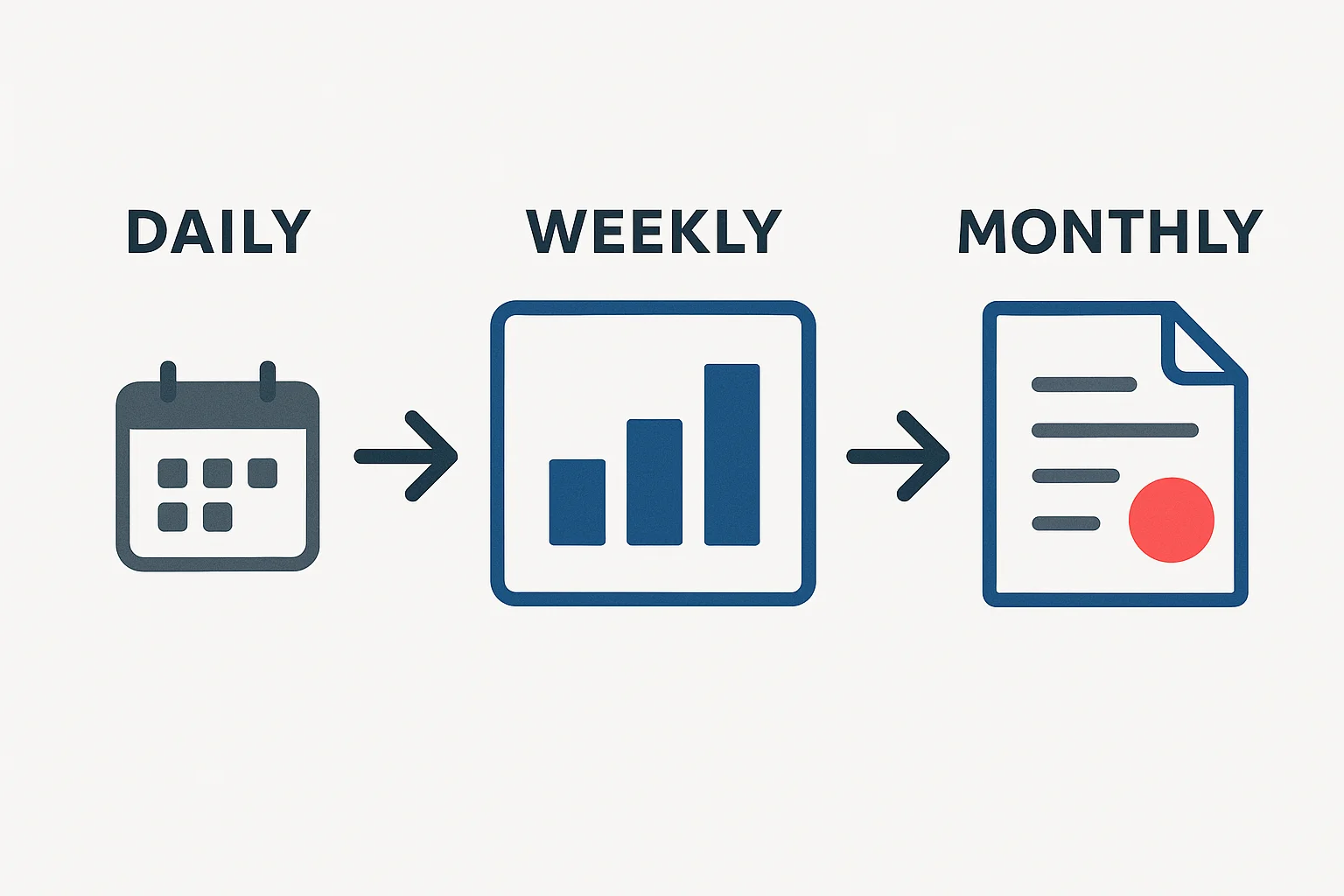
Weekly Summary
Analyze:
- Total idle time hours
- Most common causes
- Cost impact
- Trends (improving or worsening?)
Action items: Address top 2-3 causes
Monthly Review
Calculate:
- Total idle time percentage
- Cost of idle time
- Progress on bottleneck fixes
- New bottlenecks emerged
Technology for Bottleneck Detection
Modern apps help identify bottlenecks automatically.
Features that help:
- Task duration tracking (planned vs actual)
- Idle time logging
- Photo timestamps (see when work happening)
- Resource allocation visibility
- Automatic bottleneck alerts
Example: App shows "Plastering task: planned 3 days, actual 7 days" → Investigate why.
Process Improvements to Prevent Bottlenecks
1. Look-Ahead Planning
Concept: Plan 2 weeks ahead, identify potential bottlenecks early.
Weekly meeting:
- What work is planned next week?
- What resources needed?
- What dependencies?
- What could go wrong?
- Mitigation plan?
2. Buffer Management
Strategic buffers:
- Material buffer (3-5 days stock of critical items)
- Time buffer (add 10-15% to schedules)
- Resource buffer (extra tools, backup workers)
Don't buffer everything (expensive). Buffer bottleneck resources.
3. Parallel Work Streams
Concept: While waiting for one thing, work on another.
Example:
- Ground floor plaster curing? Start first floor brick work.
- External work delayed by rain? Focus on internal work.
Requires: Good planning and coordination.
4. Cross-Training Workers
Concept: Workers skilled in multiple areas = fewer bottlenecks.
Example:
- Mason helpers also know basic carpentry
- Painters can do basic plastering
- Electrician helpers can do conduit work
Benefit: Flexibility to deploy where needed.
Conclusion
Bottlenecks are hidden profit killers. Finding and fixing them can improve productivity by 15-20% without adding resources.
Action plan:
- Observe your site for 2-3 hours this week
- Track idle time for one week
- Identify top 3 bottlenecks
- Implement fixes for #1 bottleneck
- Measure improvement
- Move to bottleneck #2
The gains compound. Fix one bottleneck, work flows faster, revealing the next bottleneck. Keep improving continuously.
Learn More
Ready to Transform Your Construction Business?
Start managing your sites efficiently with Yojo today.
Try Yojo FreeConstruction Management Expert
Senior Construction Consultant at Yojo
10+ years of experience
Reviewed on 8 January 2025
About Yojo Team
Construction management expert with 10+ years of experience helping Indian contractors build better businesses. Specialized in digital transformation for construction sites.